
12 Ways Teachers Can Make STEM Learning More Engaging
What happens when students stop asking, “Will this be on the test?” and start asking, “Can we try that again?”
That’s the kind of curiosity teachers want to encourage through STEM education.
Science, technology, engineering, and mathematics become more meaningful when students can connect what they’re learning to real-world problems, hands-on experiences, and their own interests.
But finding ways to make STEM learning more engaging can be challenging, especially when teachers are balancing curriculum requirements, limited classroom resources, and different student learning needs.
The good news is that engaging STEM lessons don’t always require expensive technology, specialized equipment, or elaborate projects.
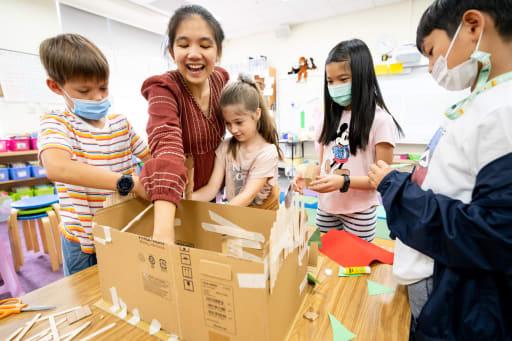
Sometimes a simple question, a cardboard box, or an everyday problem can inspire meaningful learning.
Here are 12 practical strategies teachers can use to make STEM learning more engaging while helping students develop creativity, collaboration, and problem-solving skills.
Why Student Engagement Matters in STEM Education
Student engagement involves more than keeping children busy.
Meaningful engagement occurs when students are actively thinking, participating, investigating, and connecting new information to what they already know.
A classroom activity may look exciting, but the most valuable learning happens when students understand the concepts behind what they’re doing.
For example, building a paper bridge becomes a stronger STEM lesson when students also measure its strength, compare designs, and explain why certain structures perform better.
Engaging STEM instruction can help students practice:
- Critical thinking and problem-solving.
- Scientific observation and reasoning.
- Creativity and engineering design.
- Mathematics in practical situations.
- Collaboration and communication.
- Persistence when solutions don’t work immediately.
The goal isn’t simply to make every lesson entertaining. It’s to make learning active, relevant, and purposeful.
1. Begin STEM Lessons With a Real-World Problem
Students are often more interested in learning when they understand why a concept matters.
Instead of introducing a topic only through definitions, begin with a problem students can recognize.
For example, before teaching structural design, ask:
“How could we build a bridge that allows people to cross a river safely?”
Students can brainstorm solutions, sketch ideas, and test small models.
Classroom Activity: Design a Playground
Challenge students to design a playground that is safe, accessible, and enjoyable.
They can measure available space, create drawings, and consider how different equipment might work.
STEM connections: Engineering design, measurement, geometry, and problem-solving.
Real-world challenges help students understand how STEM knowledge can be applied beyond school.
2. Incorporate Hands-On Engineering Challenges
Hands-on engineering projects encourage students to design, build, test, and improve solutions.
They also provide opportunities for teamwork and creative thinking.
Classroom Activity: Build the Tallest Tower
Provide teams with paper, tape, and a limited amount of time.
Ask them to construct the tallest freestanding tower possible.
After testing their structures, encourage students to discuss which designs worked best.
Then allow a second round for improvements.
STEM connections: Structural engineering, forces, measurement, and design iteration.
The reflection and redesign stages are just as important as the building itself.
3. Give Students More Opportunities to Ask Questions
Curiosity is central to STEM learning.
When students ask questions, they begin identifying problems and investigating possibilities.
Teachers can encourage this by creating classroom routines that welcome questions.
Classroom Strategy: Create a Wonder Wall
Designate a bulletin board or classroom space where students can post questions.
Examples might include:
- Why do some objects float?
- How do airplanes stay in the air?
- Why does the Moon appear to change shape?
- How do robots know what to do?
Select questions that connect to upcoming lessons or classroom investigations.
Students can research, discuss, and test ideas throughout the school year.
A Wonder Wall communicates that curiosity is valuable.
4. Connect STEM to Students’ Personal Interests
Students bring different interests into the classroom.
Some love sports. Others enjoy music, art, animals, video games, or cooking.
Connecting STEM lessons to these interests can help students see the relevance of what they’re learning.
Classroom Activity: Explore the Science of Sports
Have students investigate how different throwing angles affect the distance a ball travels.
They can record measurements, compare results, and create graphs.
STEM connections: Physics, mathematics, data collection, and analysis.
Teachers can also connect music to sound waves, art to geometric patterns, or cooking to chemical changes.
These connections show students that STEM is part of everyday life.
5. Use Technology With a Clear Learning Purpose
Technology can support engaging STEM lessons when it helps students investigate, create, or understand concepts.
Digital tools should serve the learning objective rather than becoming the focus of the lesson.
Classroom Activity: Create an Interactive Story With Coding
Use an age-appropriate coding platform such as Scratch.
Students can create an interactive story that includes characters, movement, and simple programming instructions.
Encourage them to test their programs and correct errors.
STEM connections: Computer science, logical thinking, sequencing, and creativity.
For younger students, unplugged coding activities can introduce similar concepts without computers.
6. Encourage Collaboration Through Team Challenges
STEM professionals often work in teams.
Classroom collaboration gives students opportunities to communicate ideas, divide responsibilities, and solve problems together.
Classroom Strategy: Rotate Engineering Team Roles
Assign roles such as:
- Project designer.
- Builder.
- Materials manager.
- Data recorder.
- Presenter.
Rotate responsibilities during different projects so students can experience multiple aspects of teamwork.
Teachers should also create opportunities for individual thinking before group discussions.
This helps prevent a few confident students from dominating every activity.
7. Make Mathematics Part of Real Experiences
Students sometimes struggle to understand why mathematics matters.
STEM activities can help connect mathematical concepts to visible outcomes.
Classroom Activity: Plan a Classroom Garden
Ask students to design a small garden using a fixed amount of space.
They can measure dimensions, calculate areas, estimate costs, and determine how many plants will fit.
STEM connections: Geometry, measurement, budgeting, environmental science, and engineering.
The activity can be adapted for different grade levels by adjusting the calculations and design requirements.
8. Introduce STEM Careers Throughout the School Year
Career exploration doesn’t need to be limited to a single career day.
Teachers can introduce STEM professionals while teaching relevant topics.
During a weather lesson, discuss meteorologists.
During a unit on bridges, introduce civil engineers.
During a coding activity, explore software development.
Classroom Strategy: STEM Career Spotlight
Select one STEM career each month.
Share what professionals do, where they work, and which problems they solve.
Invite a guest speaker, show an age-appropriate interview, or ask students to create a career poster.
Resources such as the U.S. Bureau of Labor Statistics Occupational Outlook Handbook can help teachers research careers.
Regular exposure helps students recognize the variety of opportunities available through STEM.
9. Make Room for Experimentation and Improvement
Students may become discouraged when a project doesn’t work on the first attempt.
Teachers can help them understand that testing and improvement are normal parts of engineering and scientific investigation.
Classroom Activity: Improve a Paper Airplane
Ask students to create a paper airplane and measure how far it travels.
Next, have them change one design feature and test it again.
Students can compare results and explain their findings.
STEM connections: Forces, motion, measurement, experimental design, and data analysis.
Emphasize that the goal is to learn from the results rather than simply produce the longest flight.
10. Use Storytelling to Make STEM Concepts Memorable
Stories can help students connect technical ideas to human experiences.
Teachers might introduce a lesson through the story of an inventor, engineer, scientist, or community problem.
For example, a lesson about clean water could begin with a discussion of how engineers develop systems that provide safe drinking water.
Students could then investigate simple filtration concepts using a teacher-guided demonstration.
Classroom Strategy: Tell the Story Behind an Invention
Ask students to select an everyday invention.
Have them investigate:
- What problem did it solve?
- Who contributed to its development?
- How does it work?
- How has it changed over time?
- How could it be improved?
Storytelling can make STEM concepts more relatable while encouraging research and communication.
11. Offer Students Choices in How They Learn
Giving students appropriate choices can increase their sense of ownership over learning.
For example, when studying renewable energy, students might choose to create a poster, build a model, analyze data, or deliver a short presentation.
Each option should address the same core learning objectives.
Classroom Strategy: Create a STEM Choice Board
Develop a selection of activities connected to a single topic.
For a unit on ecosystems, choices might include:
- Design a model habitat.
- Create a food web.
- Analyze environmental data.
- Develop an educational presentation.
- Investigate a local conservation challenge.
Choice boards allow students to explore their interests while demonstrating understanding.
12. Celebrate STEM Learning Through Reflection and Sharing
Students benefit from opportunities to explain their work and recognize their progress.
A STEM showcase doesn’t need to be a large school event.
It can be a classroom gallery walk, a short presentation, or a display of student projects.
Classroom Strategy: Host a Mini STEM Showcase
Ask students to present a project and explain:
- What problem they investigated.
- How they approached the challenge.
- What they discovered.
- What they would improve.
- What questions they still have.
Encourage classmates to ask thoughtful questions and share constructive feedback.
This process helps students practice communication and reflection.
How to Make STEM Learning Engaging on a Limited Budget
A lack of expensive equipment doesn’t have to prevent meaningful STEM learning.
Many useful classroom activities rely on common materials.
| Classroom Material | Possible STEM Activity |
|---|---|
| Paper and tape | Build and test bridges or towers |
| Cardboard | Design structures, vehicles, or mazes |
| Plastic cups | Explore balance, measurement, and construction |
| Balloons | Investigate forces and motion |
| Rulers and string | Measure distances and compare designs |
| Recycled containers | Create prototypes and engineering models |
Teachers can also explore free educational resources from NASA Learning Resources and PBS LearningMedia.
Before starting any activity, consider student ages, material safety, accessibility, and classroom supervision requirements.
How Teachers Can Tell Whether STEM Activities Are Working
An engaging activity should support a clear learning goal.
Before introducing a project, identify what students should understand or be able to do afterward.
During the activity, observe whether students are:
- Asking relevant questions.
- Using evidence to explain ideas.
- Applying scientific or mathematical concepts.
- Collaborating productively.
- Revising their designs based on results.
- Communicating what they learned.
Afterward, use a short reflection, exit ticket, discussion, or demonstration to assess understanding.
A student who enjoys an activity but cannot explain the underlying concept may need additional instruction.
Combining active learning with clear explanations and feedback makes STEM lessons more meaningful.
Frequently Asked Questions About Engaging STEM Lessons
How can teachers make STEM fun without expensive equipment?
Use everyday materials, real-world problems, and hands-on design challenges. The quality of the learning experience matters more than the price of the materials.
What is the best STEM activity for elementary students?
There isn’t one activity that works best for every class. Paper bridges, balloon-powered cars, coding stories, and simple scientific investigations can all be effective when matched to students’ ages and learning goals.
How can teachers engage students who don’t enjoy science?
Connect STEM concepts to interests such as art, sports, music, technology, or nature. Provide manageable challenges and opportunities for student choice.
Can STEM activities support other school subjects?
Yes. STEM projects can incorporate reading, writing, communication, art, geography, and social studies alongside science, technology, engineering, and mathematics.
How often should teachers include hands-on STEM activities?
The appropriate frequency depends on curriculum goals, classroom schedules, and available resources. Short, regular opportunities for investigation can be valuable alongside longer projects.
Final Thoughts: Make STEM Learning Meaningful, Not Just Entertaining
Making STEM learning more engaging isn’t about filling every class period with exciting experiments.
It’s about helping students understand why their learning matters.
When teachers connect STEM concepts to real-world challenges, encourage curiosity, provide hands-on experiences, and create opportunities for reflection, students can become more active participants in their education.
Small changes can make a meaningful difference.
A simple design challenge, an open-ended question, or a conversation about a STEM career may inspire a student to explore something new.
Bring More STEM Inspiration Into Your Classroom With STEM Crew Magazine!
STEM Crew Magazine shares inspiring STEM trailblazer stories, educational resources, hands-on activities, and opportunities for parents, educators, and students.
Discover new ideas to support STEM learning in your classroom and community.
Read your free digital issue at www.stemcrewmagazine.com.
Explore. Discover. Inspire. The next generation of STEM leaders starts here.