
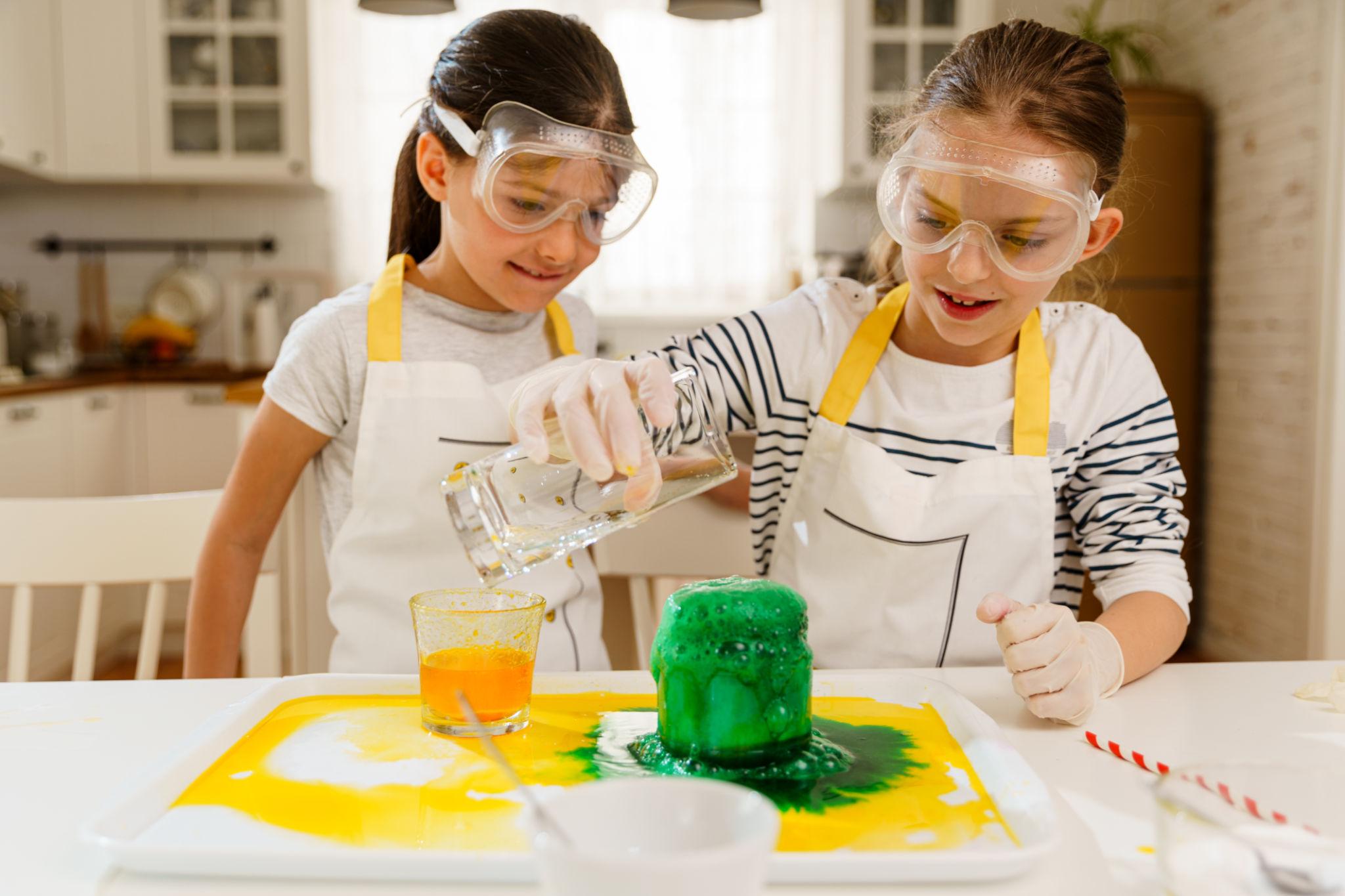
15 Easy STEM Activities for Kids Using Household Items
Looking for fun, educational activities that don’t require expensive science kits or complicated supplies?
You might already have everything you need in your kitchen, recycling bin, or craft drawer.
These easy STEM activities for kids using household items help children explore science, technology, engineering, and mathematics through hands-on learning.
From building bridges and launching paper airplanes to investigating water, magnets, and plant growth, everyday materials can become powerful learning tools.
The best part? Parents don’t need a STEM degree to get started.
Whether you’re planning a rainy-day activity, looking for educational fun during school breaks, or supporting classroom learning at home, these 15 STEM activities offer simple ways to encourage curiosity, creativity, and problem-solving.
What Are STEM Activities?
STEM stands for Science, Technology, Engineering, and Mathematics.
STEM activities help children explore concepts from these fields by asking questions, testing ideas, making observations, and solving problems.
A STEM activity might involve building a structure, investigating a scientific question, collecting data, or designing a solution.
For example, building a paper bridge introduces engineering concepts such as strength, structure, and forces.
Measuring how much weight the bridge can support adds mathematics and data collection.
Changing the bridge design and testing it again introduces experimentation and improvement.
These connections help children understand how STEM concepts apply to everyday life.
Why Use Household Items for STEM Learning?
You don’t need specialized equipment to create meaningful STEM experiences.
Common materials such as paper, cardboard, water, cups, tape, and balloons can support many learning activities.
Using household items offers several advantages:
- Affordable: Most supplies are already available at home.
- Accessible: Activities can be adapted to different ages and skill levels.
- Flexible: Projects can be completed individually or with family members.
- Creative: Children learn to design solutions using limited materials.
- Practical: Everyday objects help connect STEM to real-world experiences.
Before starting, choose activities appropriate for your child’s age and provide adult supervision when using scissors, small objects, hot water, or other potentially hazardous materials.
15 Easy STEM Activities for Kids to Try at Home
1. Build a Paper Bridge
Materials: Paper, two stacks of books, coins, and a ruler.
Instructions:
- Place two stacks of books about 6 inches apart.
- Lay a sheet of paper across the gap.
- Carefully add coins until the paper begins to bend or collapse.
- Record how many coins the bridge supported.
- Fold another sheet into an accordion shape and repeat the test.
STEM lesson: Engineering design, forces, structural strength, and measurement.
Challenge: Can you design a bridge that supports twice as many coins?
2. Create a Balloon-Powered Car
Materials: Cardboard, four lightweight wheels, two skewers, straws, tape, and a balloon.
Instructions:
- Cut a small rectangular piece of cardboard for the car’s body.
- Attach two short straw sections underneath as axle guides.
- Slide skewers through the guides and attach the wheels.
- Secure a balloon to another straw and attach it to the car.
- Inflate the balloon and release the air to move the vehicle.
STEM lesson: Forces, motion, friction, and engineering design.
Challenge: Change the vehicle’s weight and measure how far it travels.
Adults should handle sharp tools and supervise younger children.
3. Test Paper Airplane Designs
Materials: Paper, measuring tape, and a notebook.
Instructions:
- Fold a basic paper airplane.
- Launch it from the same starting location several times.
- Measure the distance of each flight.
- Create a second design with different wings.
- Compare the results.
STEM lesson: Aerodynamics, measurement, data collection, and experimental design.
Challenge: Which design travels farthest on average?
4. Make a Homemade Rain Gauge
Materials: Clear plastic bottle, ruler, tape, marker, and small stones.
Instructions:
- Ask an adult to cut the top from a plastic bottle.
- Place small stones in the bottom to help stabilize it.
- Add a small amount of water and mark that starting level.
- Use a ruler to create measurement marks above the starting level.
- Place the gauge outdoors in an open location and record changes after rainfall.
STEM lesson: Weather observation, measurement, and data collection.
Challenge: Compare your readings with a local weather report.
For more accurate measurements, use a container with straight sides and a consistent measurement scale.
5. Explore What Floats and Sinks
Materials: Bowl of water, spoon, cork, plastic lid, small stone, and other water-safe objects.
Instructions:
- Gather several household objects.
- Predict whether each will float or sink.
- Place each object in water.
- Record your observations.
- Compare your predictions with the results.
STEM lesson: Buoyancy, density, observation, and prediction.
Challenge: Can you make a small piece of modeling clay float by changing its shape?
6. Create a Marble Maze
Materials: Cardboard, paper strips, tape, scissors, and a marble.
Instructions:
- Use cardboard as the maze base.
- Fold paper strips to create walls.
- Tape the walls into a maze pattern.
- Tilt the board gently to guide the marble through the maze.
- Redesign sections that are too easy or difficult.
STEM lesson: Gravity, motion, engineering design, and problem-solving.
Challenge: Design a maze with three turns and one obstacle.
Marbles are choking hazards for young children. Use a larger ball for younger participants.
7. Investigate How Plants Grow
Materials: Seeds, soil, containers, water, and a notebook.
Instructions:
- Plant the same type of seed in two similar containers.
- Place both containers in suitable growing conditions.
- Change one factor, such as the amount of light each receives.
- Keep other conditions as consistent as possible.
- Record observations over several days or weeks.
STEM lesson: Biology, scientific investigation, and data collection.
Challenge: Create a graph showing plant height over time.
Avoid leaving plants in unsafe conditions or using chemicals without appropriate guidance.
8. Build the Tallest Paper Tower
Materials: Paper, tape, and a ruler.
Instructions:
- Give each participant the same number of paper sheets.
- Set a time limit.
- Build the tallest tower that can stand without support.
- Measure each tower.
- Make improvements and test again.
STEM lesson: Engineering design, structural stability, measurement, and creativity.
Challenge: Build a taller tower using less tape.
9. Explore Static Electricity With a Balloon
Materials: Balloon, small pieces of paper, and a dry cloth.
Instructions:
- Tear paper into small pieces.
- Inflate and tie a balloon.
- Rub the balloon against a dry cloth.
- Hold it near the paper pieces.
- Observe what happens.
STEM lesson: Static electricity and electric charge.
Challenge: Test different fabrics and compare the results.
Keep balloons and broken balloon pieces away from young children because of choking risks.
10. Create a Simple Water Filter Model
Materials: Clear cups, coffee filter, clean sand, gravel, water, and a container.
Instructions:
- Place a coffee filter in a funnel or suitable holder.
- Add layers of gravel and clean sand.
- Prepare a small amount of water mixed with clean soil.
- Slowly pour the mixture through the filter.
- Compare the appearance of the water before and after filtering.
STEM lesson: Environmental engineering, filtration, and observation.
Important: This is a demonstration only. Filtered water is not safe to drink, even if it looks clear. The activity does not remove all harmful microorganisms or contaminants.
Challenge: Compare different filter layer arrangements.
11. Make a Homemade Sundial
Materials: Paper plate, pencil or straw, modeling clay, marker, and access to sunlight.
Instructions:
- Secure a pencil or straw upright in the center of a paper plate.
- Place the plate in a sunny location.
- Mark the position of the shadow at regular intervals.
- Label the times.
- Observe how the shadow changes throughout the day.
STEM lesson: Earth’s rotation, sunlight, observation, and measurement.
Challenge: Compare shadow lengths at different times.
12. Investigate Sound Vibrations
Materials: Empty tissue box, rubber bands, and a pencil.
Instructions:
- Stretch rubber bands across the opening of the box.
- Gently pluck each band.
- Listen to the sounds.
- Change the tension of one band.
- Compare the resulting sounds.
STEM lesson: Sound waves, vibration, and pitch.
Challenge: Can you create three noticeably different pitches?
Use age-appropriate supervision with rubber bands.
13. Create a Color-Changing Flower Experiment
Materials: White carnations or celery stalks with leaves, clear cups, water, and food coloring.
Instructions:
- Fill two cups with water.
- Add different food colors to each cup.
- Place a white carnation or celery stalk in each cup.
- Observe the plants over the next day or two.
- Record any color changes.
STEM lesson: Water transport in plants and observation.
Challenge: Compare which colors become most visible.
14. Build a Simple Pulley Model
Materials: String, a small spool or smooth wheel, a lightweight cup, and a sturdy support.
Instructions:
- Ask an adult to secure the spool or wheel so it can rotate freely.
- Pass a string over the wheel.
- Attach a lightweight cup to one end.
- Place a small object in the cup.
- Pull the other end of the string to lift the cup.
STEM lesson: Simple machines, forces, and mechanical systems.
Challenge: Compare how lifting an object feels with and without the pulley.
Use only lightweight objects, secure the support, and keep fingers clear of moving parts.
15. Design an Egg Protection Device
Materials: Cardboard, paper, tape, cotton balls or other cushioning materials, and a plastic egg.
Instructions:
- Challenge your child to design a protective container.
- Build the container using available materials.
- Place a plastic egg inside.
- Drop the container from a low, adult-approved height onto a clear surface.
- Inspect the design and make improvements.
STEM lesson: Forces, impact, engineering design, and materials.
Challenge: Reduce the amount of cushioning material while maintaining protection.
A plastic egg keeps the activity cleaner and avoids the risks associated with dropping raw eggs.
How to Choose the Right STEM Activity for Your Child
Different activities appeal to different interests and age groups.
Younger children may enjoy sorting, building, observing plants, or experimenting with water.
Older elementary students may enjoy engineering challenges that involve measurements, comparisons, and design improvements.
Consider your child’s interests, attention span, and comfort level.
For example:
- Kids who love building: Paper bridges, towers, and balloon-powered cars.
- Kids who enjoy nature: Plant growth, rain gauges, and water investigations.
- Kids interested in physics: Paper airplanes, pulleys, and static electricity.
- Kids who love creativity: Marble mazes, egg protection devices, and engineering designs.
The best activity is one that encourages your child to ask questions and explore.
How to Turn a Fun Activity Into a Meaningful STEM Lesson
An activity becomes more educational when children have opportunities to think about what they’re doing.
Try using this simple approach.
Ask a Question
Begin with a question such as, “Which paper bridge design will support the most weight?”
Make a Prediction
Encourage your child to explain what they think will happen and why.
Test the Idea
Complete the activity and observe the results.
Record What Happened
Use drawings, notes, measurements, or photographs to document the results.
Make Improvements
Ask what could be changed and test the new design.
This approach introduces scientific investigation and engineering design without making the activity overly complicated.
Helpful STEM Activity Resources for Families
Families can find additional educational ideas through reputable organizations.
NASA Learning Resources: NASA offers educational activities and resources related to science, engineering, and space exploration.
PBS LearningMedia: PBS LearningMedia provides educational resources covering science, mathematics, and other subjects.
Science Buddies: Science Buddies offers STEM project ideas and educational activities for different grade levels.
These resources can help families continue exploring STEM beyond the activities in this article.
Frequently Asked Questions About STEM Activities at Home
What are the easiest STEM activities for kids?
Paper bridges, paper airplanes, floating and sinking experiments, and simple tower challenges are easy starting points that use common household materials.
Can preschoolers participate in STEM activities?
Yes. Preschoolers can explore age-appropriate activities involving sorting, building, observation, and simple experiments with close adult supervision.
Do STEM activities require expensive supplies?
No. Many useful STEM activities can be completed with paper, cardboard, cups, tape, water, and other household items.
How long should a STEM activity take?
Activity length depends on the child’s age and the project. Some challenges take 10–20 minutes, while plant experiments and other investigations continue over several days.
How can parents make STEM activities more educational?
Encourage children to make predictions, observe results, explain their thinking, and test improvements rather than focusing only on completing the project.
Final Thoughts: STEM Learning Starts With Curiosity
You don’t need a laboratory, expensive equipment, or advanced scientific knowledge to introduce children to STEM.
Sometimes all it takes is a sheet of paper, a balloon, or a cardboard box.
These 15 easy STEM activities give children opportunities to build, experiment, investigate, and discover how the world works.
More importantly, they help children recognize that STEM is part of everyday life.
The next time your child says, “I’m bored,” consider turning an ordinary household item into an opportunity for discovery.
Discover More Hands-On STEM Inspiration With STEM Crew Magazine!
STEM Crew Magazine shares STEM activities, educational resources, and inspiring stories designed to help parents, educators, and students explore the possibilities of science, technology, engineering, and mathematics.
Read your free digital issue at www.stemcrewmagazine.com.
Explore. Discover. Inspire. The next generation of STEM leaders starts here.