10 STEM Programs for Elementary & Middle School Students
Does your child love building things, solving puzzles, experimenting with science, or figuring out how technology works?
Those interests could be the beginning of an exciting STEM journey.
Science, technology, engineering, and mathematics—collectively known as STEM—offer opportunities for children to explore how the world works while developing creativity, confidence, and problem-solving skills.
But STEM learning doesn’t have to stop when the school day ends.
Across the country, students can participate in robotics teams, science clubs, engineering competitions, coding programs, and hands-on enrichment experiences.
Finding the right STEM programs for elementary and middle school students can help families introduce children to new interests and connect them with supportive learning communities.
This guide highlights ten types of STEM programs and opportunities worth exploring, along with practical tips for choosing experiences that fit your child’s age, interests, and learning needs.
[H2] Why STEM Programs Matter for Young Students
STEM enrichment programs create opportunities for students to apply classroom knowledge to real-world challenges.
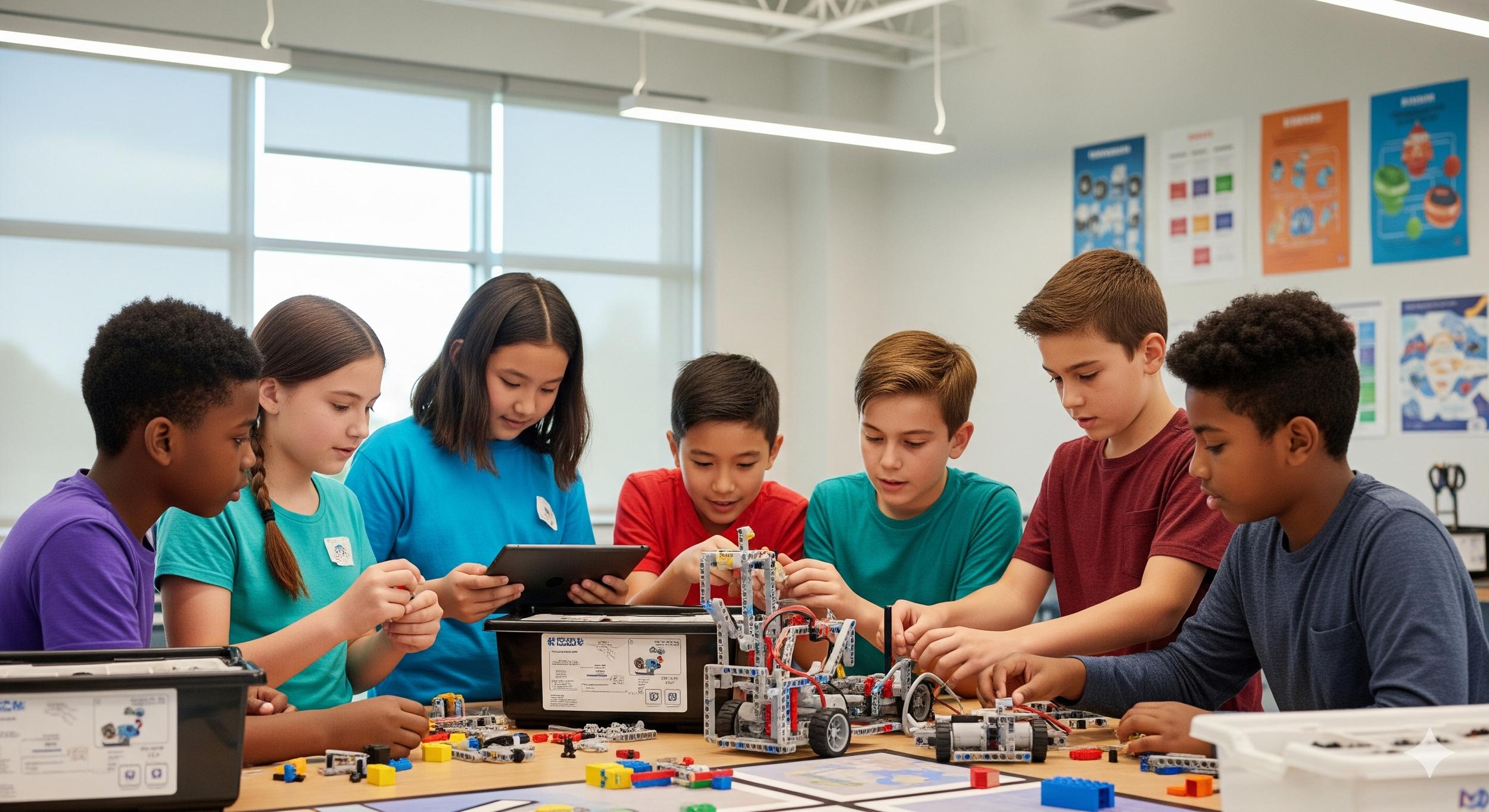
Children may design a robot, investigate environmental problems, write computer programs, or work with teammates to solve an engineering challenge.
These experiences can help students practice:
- Critical thinking and problem-solving.
- Creativity and innovation.
- Communication and teamwork.
- Mathematical reasoning.
- Scientific observation.
- Engineering design.
- Persistence through trial and error.
They can also introduce children to STEM careers they may not encounter in everyday life.
Importantly, students don’t need advanced technical skills or perfect grades to begin exploring STEM.
Many introductory programs are designed for beginners.
[H2] 1. FIRST Robotics Programs
Best for: Students interested in robotics, teamwork, coding, and engineering.
FIRST offers robotics-based programs for different age groups.
Its programs combine technical learning with collaboration and problem-solving.
Depending on the program, students may build models, design robots, write code, and participate in team challenges.
[H3] What Students Can Learn
- Basic engineering design.
- Robotics and programming.
- Team collaboration.
- Communication and presentation.
- Creative problem-solving.
[H3] How to Get Started
Visit the FIRST website to explore its current programs and locate participating teams or organizations.
Program availability, costs, and age requirements vary by location and season.
Families can also ask schools whether they sponsor robotics teams.
[H2] 2. Science Olympiad
Best for: Students who enjoy science investigations, engineering challenges, and academic competitions.
Science Olympiad offers team-based STEM competitions that encourage students to explore different scientific and technical subjects.
Events can involve topics such as biology, chemistry, physics, engineering, and earth science.
Middle school students may participate through school-based teams, while some areas also offer elementary-level opportunities.
[H3] What Students Can Learn
- Scientific knowledge and inquiry.
- Experimental design.
- Engineering problem-solving.
- Teamwork and preparation.
- Time management.
[H3] How to Get Started
Ask your child’s school about Science Olympiad participation.
Families can also explore the organization’s official website for information about divisions, events, and state programs.
[H2] 3. Girls Who Code
Best for: Students interested in coding, computer science, and technology.
Girls Who Code provides educational opportunities intended to expand access to computer science learning.
Program formats, grade levels, and participation requirements may vary.
Students can explore coding concepts while connecting technology to creativity and real-world problem-solving.
[H3] What Students Can Learn
- Computer science fundamentals.
- Coding and computational thinking.
- Collaboration.
- Technology-based problem-solving.
- Confidence in exploring technical interests.
[H3] How to Get Started
Review current program offerings and eligibility information on the official Girls Who Code website.
Families can also ask local schools, libraries, and community organizations about coding clubs.
[H2] 4. 4-H STEM Programs
Best for: Students interested in hands-on science, environmental learning, engineering, and community activities.
4-H offers youth development programs that may include STEM experiences through local clubs, events, camps, and educational activities.
Depending on the community, students may explore robotics, agriculture, environmental science, aerospace, or other technical topics.
[H3] What Students Can Learn
- Scientific investigation.
- Environmental awareness.
- Engineering and design.
- Leadership and teamwork.
- Community problem-solving.
[H3] How to Get Started
Contact your local Cooperative Extension office or 4-H program.
Offerings vary by county and state, so ask about age requirements, registration, fees, and upcoming STEM activities.
[H2] 5. Destination Imagination
Best for: Creative thinkers who enjoy teamwork, design, and open-ended challenges.
Destination Imagination offers educational challenges that encourage creativity, teamwork, and problem-solving.
Some challenges involve technical design, scientific thinking, or engineering concepts.
Students work together to develop solutions and communicate their ideas.
[H3] What Students Can Learn
- Creative problem-solving.
- Team collaboration.
- Engineering design.
- Presentation skills.
- Planning and project development.
[H3] How to Get Started
Explore the organization’s current challenge programs and local participation options.
Families can ask schools or community groups about forming a team.
[H2] 6. Code.org Computer Science Activities
Best for: Students interested in beginner-friendly coding and computer science.
Code.org provides educational resources that introduce students to computer science concepts.
Some activities can be completed at home, while others may be used in classrooms or organized learning programs.
Students can explore coding through interactive lessons and age-appropriate challenges.
[H3] What Students Can Learn
- Sequencing and logic.
- Computational thinking.
- Problem-solving.
- Basic programming concepts.
- Digital creativity.
[H3] How to Get Started
Explore Code.org’s available learning resources and select activities suited to your child’s age and experience.
Parents can also ask teachers whether computer science activities are included in the school curriculum.
[H2] 7. NASA STEM Learning Opportunities
Best for: Students fascinated by space, rockets, astronomy, and scientific exploration.
NASA’s Learning Resources include educational materials related to space science, engineering, mathematics, and technology.
Families and educators can explore hands-on activities, digital resources, and learning opportunities.
Some experiences may be available through schools, museums, or community partners.
[H3] What Students Can Learn
- Space science and astronomy.
- Engineering design.
- Scientific investigation.
- Mathematics applications.
- Problem-solving.
[H3] How to Get Started
Visit NASA’s educational resources website and review available activities for the appropriate age group.
Families can also check local science museums and planetariums for NASA-related educational events.
[H2] 8. Local Science Museums and STEM Centers
Best for: Students who enjoy interactive exhibits, experiments, and hands-on exploration.
Science museums and STEM centers often offer workshops, camps, demonstrations, and educational events.
Programs may introduce children to subjects such as robotics, chemistry, physics, engineering, and environmental science.
[H3] What Students Can Learn
- Scientific observation.
- Engineering principles.
- Experimentation.
- Technology applications.
- Curiosity-driven learning.
[H3] How to Get Started
Search for science museums, discovery centers, children’s museums, and STEM learning centers in your area.
Review their event calendars for family workshops, school-break programs, and weekend activities.
Some organizations may offer reduced-cost admission or educational access programs.
[H2] 9. School and Community Robotics or Coding Clubs
Best for: Students who want regular opportunities to practice technical skills.
Not every STEM program needs to be a national competition.
School clubs, libraries, community centers, and nonprofit organizations may offer robotics and coding experiences.
Some programs focus on introductory skills, while others prepare students for competitions.
[H3] What Students Can Learn
- Coding fundamentals.
- Robotics design.
- Team collaboration.
- Debugging and troubleshooting.
- Project planning.
[H3] How to Get Started
Ask teachers, school counselors, librarians, and community organizations about existing clubs.
If no club exists, families may be able to work with educators or volunteers to explore starting one.
[H2] 10. Engineering Design Challenges and STEM Competitions
Best for: Students who enjoy building, inventing, and solving practical problems.
Engineering challenges invite students to design solutions under specific constraints.
Examples include:
- Building a bridge using limited materials.
- Creating a balloon-powered vehicle.
- Designing a structure that withstands simulated shaking.
- Developing a water conservation idea.
- Constructing a model transportation system.
Challenges may be organized by schools, museums, professional engineering groups, or community organizations.
[H3] What Students Can Learn
- The engineering design process.
- Measurement and testing.
- Creativity.
- Collaboration.
- Iteration and improvement.
[H3] How to Get Started
Look for STEM competitions, engineering outreach events, and school-sponsored challenges.
Families can also organize small engineering competitions at home.
The key is encouraging students to design, test, learn, and improve.
[H2] Quick Comparison: Which STEM Program Fits Your Child?
| STEM Opportunity | Main Focus | Typical Experience |
|---|---|---|
| FIRST | Robotics and engineering | Team challenges |
| Science Olympiad | Science and engineering | Academic competitions |
| Girls Who Code | Computer science | Coding activities |
| 4-H STEM | Applied science and technology | Clubs and projects |
| Destination Imagination | Creativity and problem-solving | Team design challenges |
| Code.org | Coding and computational thinking | Digital lessons |
| NASA Learning Resources | Space and engineering | Educational activities |
| Science Museums | Broad STEM exploration | Workshops and exhibits |
| Robotics and Coding Clubs | Technology skills | Regular club meetings |
| Engineering Challenges | Design and innovation | Build-and-test projects |
Program offerings and eligibility vary. Always check official sources before registering.
[H2] How to Choose the Right STEM Program for Your Child
With so many opportunities available, choosing a program can feel overwhelming.
The best program isn’t necessarily the most competitive or expensive.
It’s one that encourages your child to explore and stay engaged.
[H3] Consider Your Child’s Interests
Does your child enjoy building, drawing, experimenting, using computers, or exploring nature?
Choose a program that connects with those interests while introducing new skills.
[H3] Check Age and Grade Requirements
Some programs are designed for elementary students, while others focus on middle school or older participants.
Review eligibility carefully.
[H3] Understand the Time Commitment
A one-day workshop requires a different commitment from a season-long robotics team.
Consider transportation, schedules, and family responsibilities.
[H3] Review Costs and Financial Assistance
Ask about registration fees, equipment, travel, and other expenses.
Some organizations may offer scholarships, reduced fees, or sponsored participation.
[H3] Look for Supportive Learning Environments
Children benefit from programs where questions are welcomed, mistakes are treated as learning opportunities, and students have meaningful chances to participate.
[H2] How to Find Free or Low-Cost STEM Programs
Families don’t always need to spend significant money to provide meaningful STEM experiences.
Start by exploring:
- Public libraries.
- Public school enrichment programs.
- Community centers.
- Cooperative Extension and 4-H offices.
- University outreach programs.
- Nonprofit youth organizations.
- Science museum community access programs.
- Online educational resources.
Availability depends on location and funding.
Families should contact organizations directly to confirm whether programs are free, subsidized, or fee-based.
[H2] How Parents Can Encourage Participation in STEM Programs
Children may hesitate to join a new program if they believe they aren’t good at science or mathematics.
Parents can help by emphasizing exploration rather than performance.
Try saying:
“You don’t have to know how to do everything before you begin.”
“Engineers learn by testing and improving their ideas.”
“It’s okay if your first design doesn’t work.”
“Let’s find a program where you can try something new.”
Encouragement can help children approach STEM experiences with greater confidence.
Parents can also support participation by attending showcases, asking about projects, and celebrating effort and improvement.
[H2] What If Your Community Doesn’t Have Many STEM Programs?
Some families may have limited access to nearby enrichment opportunities.
If local programs aren’t available, consider starting with home-based activities, online learning resources, and community partnerships.
A small group of families might organize a monthly STEM activity.
Teachers or librarians may be interested in collaborating on a coding club or engineering challenge.
Local STEM professionals may also be willing to participate in career discussions or demonstrations.
Even a simple activity using household materials can introduce valuable STEM concepts.
[H2] Frequently Asked Questions About STEM Programs for Kids
[H3] What are the best STEM programs for elementary students?
The best choice depends on age, interests, and local availability. Introductory robotics programs, science museum workshops, 4-H activities, and beginner coding resources can be useful starting points.
[H3] Are STEM programs available for middle school students?
Yes. Middle school students may participate in robotics teams, Science Olympiad, coding clubs, engineering challenges, and other enrichment programs.
[H3] Do students need prior STEM experience?
Not always. Many programs welcome beginners, although competitive or advanced opportunities may have specific requirements.
[H3] Are there free STEM programs for kids?
Some libraries, schools, nonprofits, and online educational organizations offer free activities. Other programs may charge fees or provide financial assistance.
[H3] Can homeschooled students participate in STEM programs?
Some programs welcome homeschooled students through community teams or independent participation options. Eligibility varies by organization.
[H3] How early should children start STEM enrichment?
Children can begin exploring age-appropriate STEM concepts in early elementary school or even earlier through supervised play and simple activities.
[H2] Final Thoughts: Help Your Child Discover What’s Possible Through STEM
STEM programs give children opportunities to discover new interests, develop skills, and connect classroom learning with real-world experiences.
Whether your child joins a robotics team, attends a science museum workshop, explores coding, or participates in an engineering challenge, each experience can help build curiosity and confidence.
Families don’t need to find the perfect program immediately.
Start with your child’s interests, explore available opportunities, and encourage them to keep learning.
A single STEM experience could inspire a lifelong passion for science, technology, engineering, or mathematics.
Discover More STEM Opportunities With STEM Crew Magazine!
STEM Crew Magazine shares educational resources, inspiring STEM career stories, hands-on activities, and opportunities for students, parents, and educators.
Read your free digital issue at www.stemcrewmagazine.com.
Explore. Discover. Inspire. The next generation of STEM leaders starts here.